
The Face as a Human Signal System
By Sara Hogan, MD, FAAD
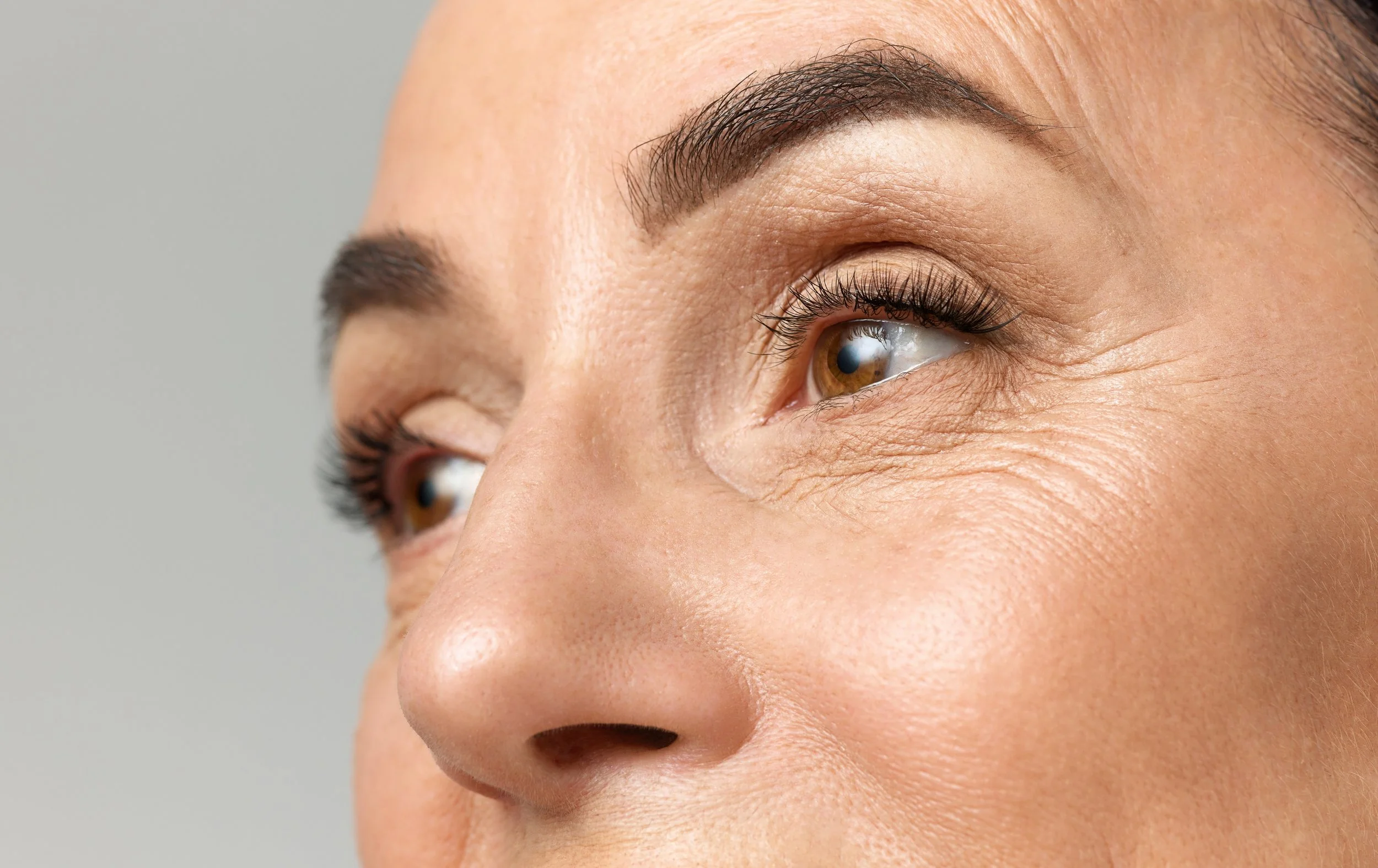
Why Natural-Looking Results Matter
Your face is one of the most powerful signals you send. Humans detect subtle changes in facial appearance and movement almost instantly, yet cosmetic treatment is often framed around correcting isolated features rather than preserving what makes a face recognizably your own.
"I don't want to look overdone."
Many patients seeking cosmetic treatment express a similar concern: they want to look refreshed and rested, but not unnatural. During consultation, they may reference public figures whose appearance appears noticeably altered or describe faces that look “off” in a way that feels difficult to define. Underneath these concerns is often the same question:
What makes a face appear natural?
The answer may lie in how the brain processes facial appearance and movement.
The Uncanny Valley and Facial Recognition
In 1970, Japanese roboticist Masahiro Mori described a phenomenon called bukimi no tani, or the uncanny valley. As objects become increasingly human-like, people generally respond more positively – until a threshold is reached. At that point, instead of appearing more familiar, subtle near-human deviations can create a sense of unfamiliarity or discomfort.¹˒²
Although originally described in robotics, similar concepts have been explored in facial perception. Humans are extraordinarily sensitive to faces. Brain imaging studies suggest that when facial appearance and movement appear mismatched, regions involved in processing perceptual conflict become more active.³
This concept has relevance in cosmetic dermatology. When treatment changes volume, contour, or expression in ways that no longer align with natural facial movement, observers may perceive that something feels different, even if they cannot identify exactly why.
Recognition of faces begins remarkably early in life. Newborns demonstrate recognition of familiar faces within hours of birth.⁴ By infancy, humans already show increasingly sophisticated responses to facial identity and emotional expression.⁵⁻⁷ Over time, the brain develops refined expectations for how human faces should look, move, and communicate.
The Anatomy of Looking Human
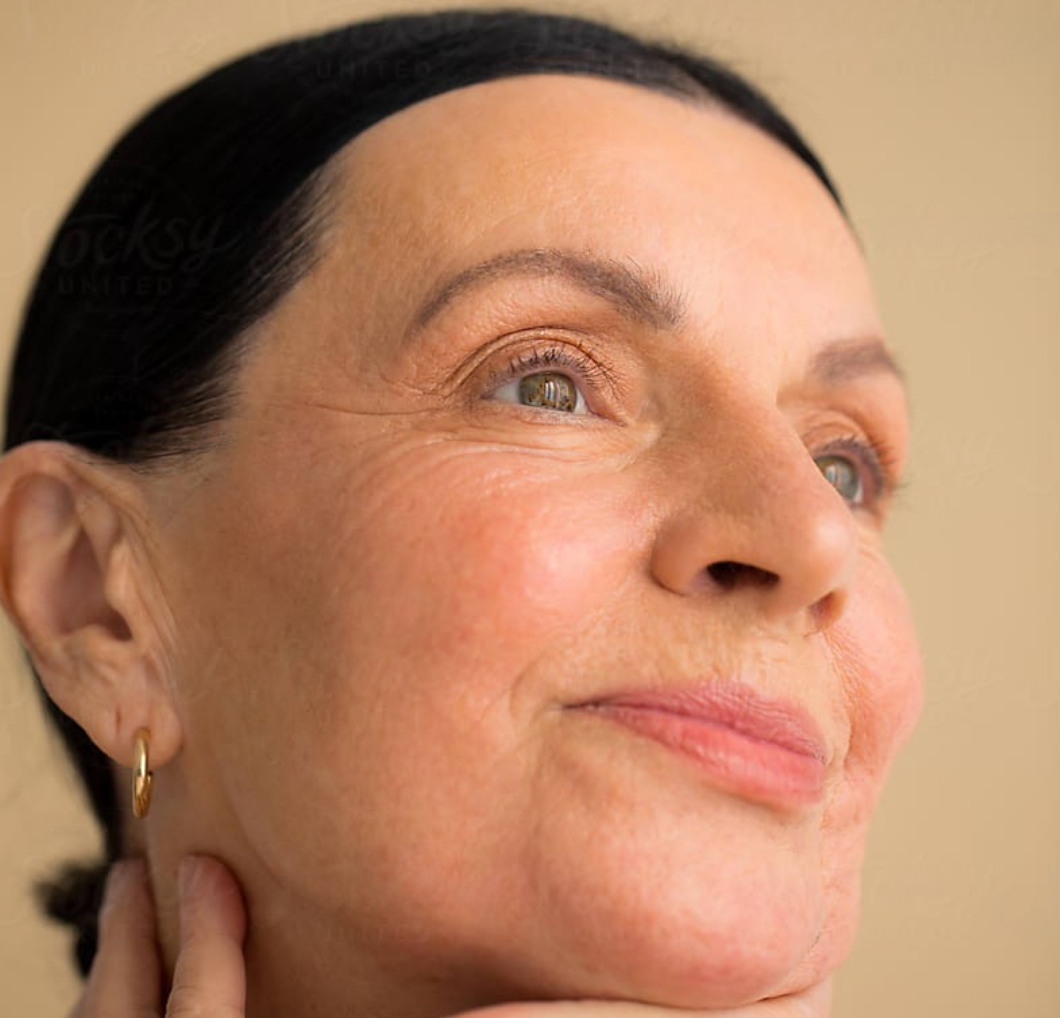
Features commonly targeted with filler and neuromodulators, such as the nasolabial folds, tear troughs, marionette lines, and glabellar lines, are not defects to erase. They are functional anatomical landmarks that contribute to facial expression, emotion recognition, and human connection.
The nasolabial fold has been described as the “keystone of the smiling mechanism,” formed through interactions among facial musculature, skin, and underlying fat compartments.⁸˒⁹ It naturally deepens during smiling. It is not simply a “wrinkle.”
When excessive volume limits natural folding, a smile may appear flatter or less dynamic. Likewise, complete elimination of the nasolabial fold removes a defining feature of human facial anatomy.
The tear trough also contributes to how the eye region is defined. Studies suggest that visual attention to this area influences facial recognition and interpretation of emotional states.¹⁰
When dermal filler is placed superficially or used to fully erase this contour, it may not restore natural anatomy. Complete obliteration of the tear trough can alter the shadows and transitions that make a face feel recognizable and expressive.
Why Natural Matters
Every face is structurally unique. Thoughtful treatment requires understanding anatomy, evaluating movement, and determining where support restores balance rather than disrupts natural expression. This differs from protocol-driven treatment approaches that prioritize standardization. Human faces do not age, or move, in a standardized way.
The HARMONY study reflected this concept by demonstrating that comprehensive treatment using conservative filler volumes across multiple facial areas, with selective refinement overtime, improved patient-reported outcomes including satisfaction and perceived age.¹¹ Simply put: strategic treatment often outperforms aggressive correction of a single line or fold.
This extends beyond aesthetics. Research suggests that preserving natural facial proportionality is associated with more favorable perceptions of trustworthiness, attractiveness, confidence, and social competence.¹²⁻¹⁴
The face functions as a visual signal. The most effective aesthetic outcomes are often not those that appear transformed, but those that remain recognizable and authentically your own.
REFERENCES
MacDorman KF, Ishiguro H. The uncanny advantage of using androids in cognitive and social science research. Interaction Studies. 2006;7:297-337.
Kätsyri J, de Gelder B, Takala T. Virtual faces evoke only a weak uncanny valley effect: An empirical investigation with controlled virtual face images. Perception. 2019;48(10):968-991.
Saygin AP, Chaminade T, Ishiguro H, Driver J, Frith C. The thing that should not be: predictive coding and the uncanny valley in perceiving human and humanoid robot actions. Soc Cogn Affect Neurosci. 2012;7(4):413-422.
Pascalis O, de Schonen S, Morton J, Deruelle C, Fabre-Grenet M. Mother's face recognition by neonates: a replication and an extension. Infant Behav Dev. 1995;18:79-85.
Safar K, Moulson MC. Three-month-old infants show enhanced behavioral and neural sensitivity to fearful faces. Dev Cogn Neurosci. 2020;42:100759.
Nelson CA, Dolgin KG. The generalized discrimination of facial expressions by seven-month-old infants. Child Dev. 1985;56:58-61.
Lewkowicz DJ, Ghazanfar AA. The development of the uncanny valley in infants. Dev Psychobiol. 2012;54(2):124-132.
Snider CC, Amalfi AN, Hutchinson LE, Sommer NZ. New insights into the anatomy of the midface musculature and its implications on the nasolabial fold. Aesthetic Plast Surg. 2017;41(5):1083-1090.
Zufferey J. Anatomy of the nasolabial fold: the keystone of the smiling mechanism. Aesthetic Plast Surg. 1992;16(1):7-10.
Rohrich RJ, Pessa JE, Ristow B. The youthful cheek and the deep medial fat compartment. Plast Reconstr Surg. 2008;121(6):2107-2112.
Narurkar VA, Cohen JL, Dayan S, et al. A comprehensive approach to multimodal facial aesthetic treatment: injection techniques and treatment characteristics from the HARMONY study. Dermatol Surg. 2016;42(Suppl 2):S177-S191.
Villavisanis DF, Workman CI, Cho DY, et al. Associations of facial proportionality, attractiveness, and character traits. J Craniofac Surg. 2022.
Sofer C, Dotsch R, Wigboldus DH, Todorov A. What is typical is good: the influence of face typicality on perceived trustworthiness. Psychol Sci. 2015.
Othman S, Cohn JE, Daggumati S, Bloom JD. The impact of dermal fillers on perceived personality traits and attractiveness. Aesthetic Plast Surg. 2021.